
Burnout Revenge
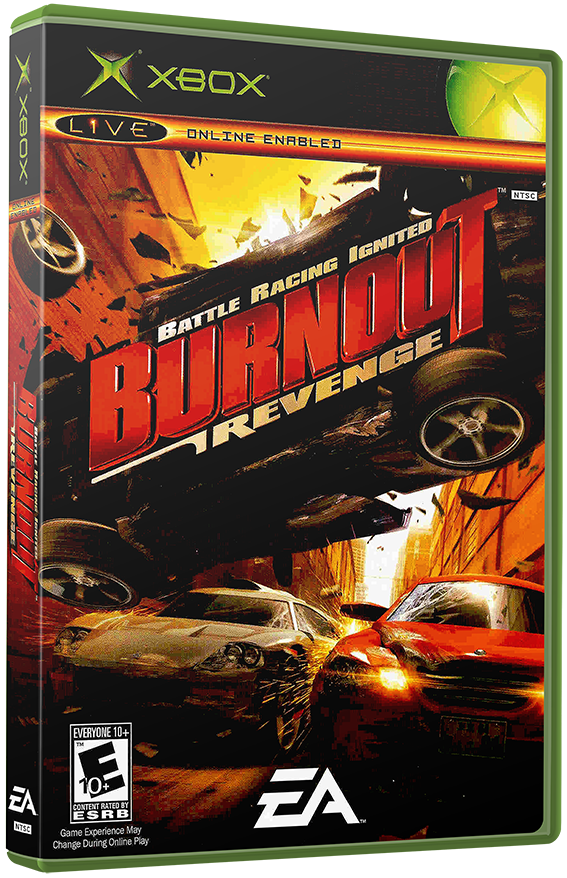


Game Type: Released
Max Players: 2
Genre: Racing
Developers: Criterion Games
Publishers: Electronic Arts
Cooperative: No
PEGI: U
Game Overview
Burnout Revenge is a racing game in which your desire for destruction is as important as your ability to reach the finish line. The sequel to Burnout 3 adds some new features such as detailed car damage, crash combos, and a meter that rewards vengeance on the road. Game modes run the range from pure racing to pure destruction on a handful of real-world locations, including Detroit and Rome. Burnout Revenge also supports online play for challenging other players. In Burnout Revenge, players compete in a range of racing game types with different aims. These take place within rush hour traffic and include circuit racing, Road Rage where players cause as many rivals to crash as possible within a time limit, or until the player's car is wrecked, Burning Lap a single-lap, single-racer time attack mode, Eliminator a circuit race where every thirty seconds, the last-placed racer's car is detonated; the race continues until only one racer is left, and Crash where the player is placed at a junction with the aim of accumulating as many "Crash Dollars" as possible. A new gameplay feature in Burnout Revenge is the ability to ram same way small to medium traffic, known as "traffic checking", propelling the rammed car forward; the event in which a "checked" car hits a rival is considered as a Traffic Takedown. Traffic checking is the focus of a new race type, Traffic Attack whereby a player must earn a set amount of Crash Dollars through checking traffic, which can be used later on.
Introduction to Burnout Revenge
Burnout Revenge is a high octane racing game developed by Criterion Games for the original Xbox. It builds on the chaotic, destructive racing formula that the Burnout series is known for. Players are rewarded for aggressive driving, taking out opponents in spectacular crashes and using the environment to their advantage. The game emphasizes revenge, with players encouraged to retaliate against drivers who have wrecked them in previous races. This instalment introduces a unique gameplay feature where players can utilize "traffic checking," allowing smaller vehicles to be shoved aside without penalty, enhancing the sense of speed and control in congested streets. Burnout Revenge is not just a racing game; it’s a test of reflexes, aggression, and the thrill of high speed mayhem.
Gameplay Mechanics
Burnout Revenge’s gameplay mechanics are centred around the concept of "takedowns," which reward players for knocking out opponents in spectacular fashion. Players earn points and fill up their boost meter by ramming rival cars into walls or forcing them into oncoming traffic. This gameplay mechanic encourages aggressive tactics, making each race a chaotic struggle for supremacy. Additionally, traffic checking allows players to plough through smaller traffic vehicles without slowing down. This creates opportunities for daring moves and chain reactions, as traffic can be used as projectiles against opponents. The emphasis on destruction adds a new layer to traditional racing gameplay, making each race a dynamic and intense experience.
World Tour Mode
The main single player campaign, known as World Tour mode, challenges players to travel across various cities, taking part in events designed to test different aspects of their driving skills. From Road Rage events, where players aim to take down as many opponents as possible, to Traffic Attack, where they plough through traffic for points, World Tour mode offers a diverse set of challenges. Each event has specific objectives, and successful completion grants stars and unlocks new vehicles and races. The structure of World Tour mode encourages replay ability, as players can return to events to improve their scores, earn more stars, and unlock faster cars and new locations, progressively ramping up the challenge.
Traffic Attack Mode
In Traffic Attack mode, players are encouraged to ram into as many smaller traffic vehicles as possible within a time limit. Unlike standard races, Traffic Attack is solely focused on causing destruction, with each successful hit adding to the player’s score and extending the timer. The mode rewards precision and timing, as stringing together multiple hits increases the player’s score multiplier. Traffic Attack mode allows players to experience the thrill of weaving through dense traffic at high speeds while causing maximum chaos. It’s a mode that embodies the spirit of Burnout Revenge, focusing purely on the destructive aspects of racing, adding a thrilling twist to the gameplay experience.
Crash Mode
Burnout Revenge also features Crash Mode, a signature mode of the Burnout series that lets players launch their car into busy intersections to cause massive pileups. In this mode, the goal is not to race but to create the most destruction possible. Players aim to trigger a chain reaction of collisions, using strategically placed ramps and explosive items to maximize damage. With each pileup, players earn points based on the extent of the wreckage, the number of cars involved, and the amount of property damage caused. Crash Mode offers a unique break from traditional racing and highlights the game’s focus on thrilling, chaotic scenarios.
Revenge Takedowns
One of the core features in Burnout Revenge is the concept of Revenge Takedowns. If a rival driver has taken out the player in a previous race, they will be marked, and players are encouraged to seek vengeance. Revenge Takedowns offer a way for players to exact payback, adding a personal element to the racing experience. The game keeps track of these rivalries, making each encounter feel intense and meaningful. Successfully executing a Revenge Takedown rewards players with additional points and fills up the boost meter, creating a satisfying sense of retribution. This feature ties into the game’s central theme of retribution and aggressive driving.
Online Multiplayer
Burnout Revenge offers an online multiplayer mode where players can compete against each other in various event types. The online mode features classic race and takedown events, allowing players to challenge friends or strangers. Online play emphasizes the same aggressive tactics as the single player modes, with players encouraged to take down rivals to gain an edge. Leader boards track the best performances, encouraging players to continuously improve and compete for the top spots. Burnout Revenge’s online multiplayer adds significant replay ability, as players face off against real opponents, bringing an extra level of unpredictability and intensity to each race.
Visual and Audio Presentation
Burnout Revenge boasts a polished visual and audio presentation that immerses players in its high speed, chaotic world. The game features a variety of urban environments, each meticulously designed to feel realistic and densely packed with traffic. Dynamic lighting, detailed vehicle models, and impressive crash effects add to the visual appeal, while the game’s fast paced soundtrack complements the high energy gameplay. Sound effects, from the roar of engines to the crunch of metal during crashes, enhance the sense of impact and excitement. The attention to audio visual detail makes each race feel immersive, drawing players deeper into the world of Burnout Revenge.
Conclusion
Burnout Revenge is a standout title in the racing genre, known for its innovative mechanics and emphasis on destructive gameplay. Its combination of speed, strategy, and aggression creates a unique racing experience that challenges traditional genre conventions. With modes like World Tour, Traffic Attack, and Crash Mode, the game offers varied experiences that cater to different playstyles, from high speed racers to destruction enthusiasts. The addition of Revenge Takedowns and online multiplayer adds depth and replay ability, ensuring that each race feels fresh and intense. Burnout Revenge remains a beloved title for fans of action packed racing, solidifying its place as a classic of the original Xbox era.
Read or download in a new browser window (PDF)

